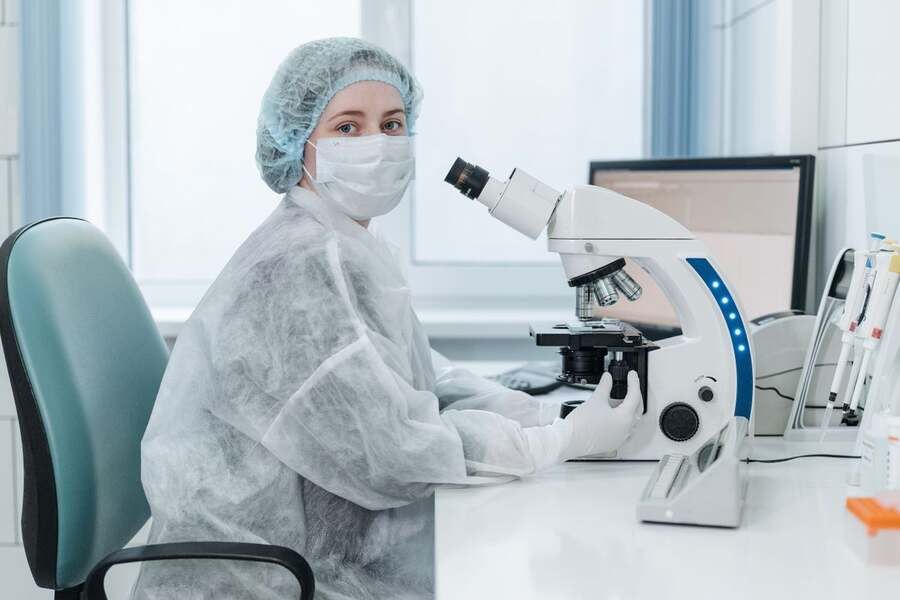
For more than a century, pathology worked the same basic way. Tissue went onto glass slides, and a pathologist looked at those slides under a microscope. The process produced remarkable medicine, but it also tied diagnosis to physical slides, physical locations and the limited hours of a limited number of specialists. Digital pathology software and artificial intelligence are changing that, and the effects reach well beyond the lab. Patients, referring physicians, hospitals and entire health systems all feel the difference.
A Quick Look at What Is Changing
Digital pathology starts with scanning glass slides into high-resolution whole slide images. Those images can be viewed on a screen, shared instantly, stored indefinitely and analyzed by software. AI then builds on that foundation, using algorithms to highlight areas of concern, measure biomarkers, check slide quality and help prioritize cases.
Neither technology replaces the pathologist. Instead, they change where, how fast and how consistently pathologists can work. That shift ripples outward in several directions.
For Patients: Faster and More Accessible Answers
Waiting for a biopsy result can be one of the most stressful experiences in healthcare. Every day of delay adds anxiety and can push back treatment decisions.
Digital pathology shortens that wait in practical ways. Slides no longer need to travel by courier to a specialist in another city. A case can reach the right subspecialist the same day it is scanned. Second opinions that once took a week can happen in hours.
Access improves too. Rural hospitals and smaller communities often lack subspecialty pathologists on site. With digital slides, a patient in a small town can have a complex case reviewed by an expert hundreds of miles away without anyone shipping glass. That expands access to high-level diagnostic expertise in places that have historically gone without it.
For Pathologists: A Better Way to Work
Pathology faces a well-documented workforce shortage, while case volumes and complexity keep rising. Digital pathology software helps pathologists manage that pressure.
Remote sign-out gives pathologists flexibility in where they work and lets labs balance workload across locations. Side-by-side comparison of current and prior slides becomes easy. Measurement tools and annotations replace manual estimates. AI tools take on repetitive tasks like counting mitotic figures or scoring stains, freeing time for complex judgment calls.
Workflow design matters a great deal here. When images sit in a separate viewer from the case, pathologists bounce between applications and the lab has to keep slides matched to the right patient. Integrated digital pathology software that keeps the case and its slides in one record removes that friction and supports patient safety at the same time.
For Referring Physicians: Clearer Communication
Oncologists, dermatologists, gastroenterologists and surgeons depend on pathology reports to guide treatment. Digital workflows improve that relationship in a few ways:
- Faster turnaround helps physicians move patients into treatment sooner
- Structured, synoptic reports make key findings easier to read and act on
- Shared images support tumor boards and multidisciplinary discussions, even across sites
- Electronic delivery into the physician’s EHR reduces lost or delayed reports
When a pathologist can pull up the exact image behind a finding during a tumor board, conversations become more precise and treatment planning becomes more collaborative.
For Research and Education: A Shared Library of Cases
Digital slides also change how medicine learns. Teaching collections that once lived in physical slide boxes can now be shared with residents anywhere. Researchers can search large archives of digitized cases, apply image analysis at scale and study patterns that would be impossible to see one glass slide at a time. Those insights feed back into better algorithms, better diagnostic criteria and, eventually, better patient care.
For Health Systems: Efficiency at Scale
Hospitals and health systems often operate multiple labs across a region. Without digital pathology, each site needs enough pathologists to cover its own volume and specialties. With digital slides, cases can route across the network to whoever has capacity and the right expertise.
That pooled model helps health systems reduce turnaround variability, cover subspecialties more efficiently and avoid costly locum arrangements. Digital archives also replace rooms full of glass slides and paper records, making prior cases instantly available for comparison.
AI adds another layer. Operational algorithms can flag urgent cases, predict volume swings and catch data errors before they reach billing. Diagnostic algorithms can improve consistency across pathologists and sites, which supports quality programs and accreditation.
The Barriers That Still Exist
The shift to digital pathology and AI brings real challenges, and pretending otherwise does not help anyone.
Upfront costs for scanners, storage and software can be significant. Whole slide images take up far more space than traditional lab data, so infrastructure has to scale. Each AI algorithm needs validation before clinical use. Reimbursement for digital and AI-assisted work continues to evolve. Staff need training, and workflows need to change. Good healthcare technology management makes that transition smoother.
Integration may be the biggest hurdle of all. Labs that assemble a scanner from one vendor, image management from another, AI from a third and an LIS from a fourth often end up with a fragile patchwork. Consolidating as much of that workflow as possible into one platform reduces cost, risk and complexity.
The Role of the Laboratory Information System
The LIS sits at the center of every lab, so it plays a central role in digital transformation. A modern laboratory information system with digital pathology built in gives labs a single foundation for case management, images, reporting, analytics and AI integration. Cloud-based platforms help even more, scaling storage and adding capabilities without disruptive upgrade projects.
For anatomic pathology groups in particular, specialized pathology lab software with native digital workflows offers a far smoother path than retrofitting an older system.
Where Healthcare Goes From Here
Digital pathology software and AI will keep reshaping how diagnoses happen. More slides will be digitized, more algorithms will reach clinical use and more care teams will collaborate around shared images in real time. The biggest winners will be patients, who stand to get faster, more accurate and more accessible answers no matter where they live.
For labs, the path forward starts with a strong digital foundation. Once slides, cases and data live together in one system, every other improvement becomes easier to build.