A room can change a gathering before anyone says a word. Put six people around a table beside a busy bar and the conversation competes with passing strangers, music and the next group waiting to be seated. Give those same people a separate room and the evening acquires a different rhythm. They can hear one another, decide when to pause and remain together without constantly negotiating a public space. This is a useful starting point for understanding one part of the hospitality landscape in Gangnam, Seoul, South Korea.
For an overseas reader, Gangnam may suggest shopping, entertainment or the international visibility of Korean popular culture. Its private nightlife venues are less easily understood through those familiar images. Some are organized around individual rooms rather than a single public floor. Looking at this arrangement through design, rather than through claims about status, makes the format more intelligible. The central question is not who is important enough to enter. It is what a group wants the space to do.
Begin with the gathering, not the prestige
Imagine hosting several adult acquaintances after a business dinner. One guest wants to continue talking, another enjoys music, and a third would prefer somewhere without a constant stream of introductions. A large reception might suit a different occasion, but it does not automatically meet these needs. A private lounge can offer a more contained setting, provided the venue’s actual services, atmosphere and rules match what everyone wants.
This is not a uniquely Korean requirement. Small private dinners, reserved rooms and invitation-based gatherings exist in many countries. The interesting comparison is between different ways of arranging hospitality, not between national stereotypes. South Korea has diverse social scenes, and a private room represents one option within that diversity. It should not be presented as evidence that Koreans do not party, or that all business relationships depend on nightlife.
Reading a local term without turning it into a statistic
Local vocabulary can complicate the picture. The expression ilpro literally evokes “one percent,” which may sound to an English-speaking reader like a measurable claim about wealth. In a nightlife context, however, a name or positioning phrase is not proof of the income, occupation or social rank of the people using a venue. Treating the wording as verified demographic evidence would tell readers more than the available information supports.
The Korean-language guide 강남 일프로 provides a practical entry point into this terminology by introducing ten private lounge venues in Gangnam. It is a comparison resource rather than a single establishment. Its venue listings, room photographs and location information allow readers to examine individual spaces instead of assuming that every venue under a broad label offers the same experience. The listings are alphabetical, so their order should not be read as a league table.
The threshold is part of the experience
Good hospitality design begins before the main room. A clear meeting point, an identifiable entrance and an understandable route from arrival to seating can reduce awkwardness for a visiting group. That matters particularly when some guests cannot read Korean or are unfamiliar with the neighborhood. An impressive interior does little for an evening that begins with several people standing at different entrances.
For anyone comparing private venues, photographs of corridors and entrances can therefore be as useful as photographs of the central seating area. They help generate questions: Is there a waiting area? How will late arrivals find the group? Can a guest leave independently? These details should be confirmed directly rather than inferred from an attractive image. The design of arrival is ultimately about making people feel oriented, not merely making a dramatic first impression.
Privacy depends on layout, sound and service
A door alone does not establish the quality of a private room. Seating distance, sound transmission, lighting and the way staff enter all influence whether a group feels comfortable. A room may look intimate in a photograph yet be too large for easy conversation. Another may appear modest but place everyone within comfortable speaking distance. Neither can be judged solely by decorative finishes.
Acoustics deserve particular attention. Guests who want conversation should ask whether music can be adjusted and whether the room is affected by neighboring spaces. People who want a more energetic evening may place greater value on music equipment or a different seating arrangement. The right choice follows the intended activity. A venue’s total number of rooms is also distinct from the number of people one room can comfortably accommodate; those figures should never be substituted for one another.
Light should support people, not just photographs
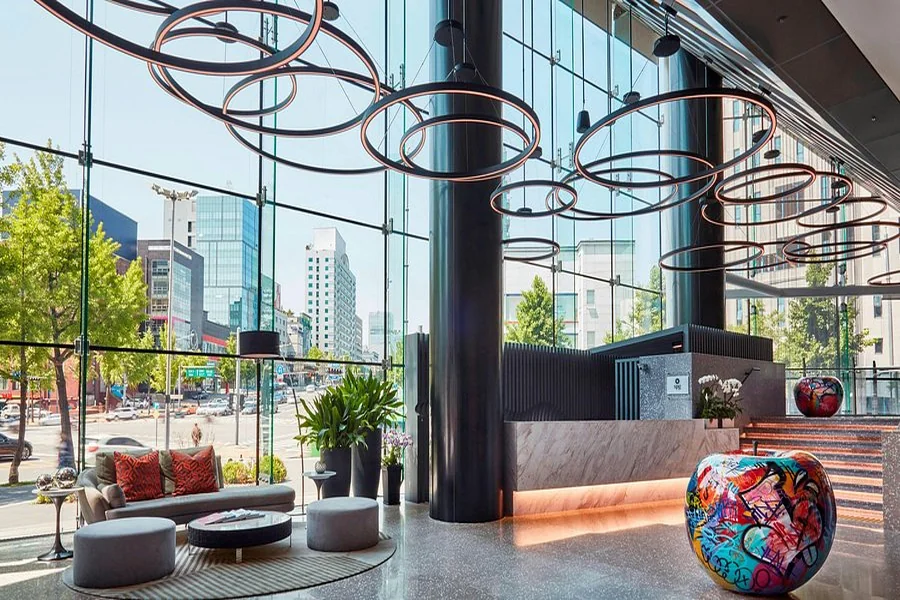
Hospitality images often emphasize atmosphere: reflected surfaces, dramatic illumination and carefully framed furniture. These elements can be appealing, but a successful gathering also needs practical visibility. Guests should be able to recognize one another, read information and move around without difficulty. If a room uses adjustable lighting, the useful question is whether it can suit the group’s activity throughout the evening.
The same principle applies to furniture. A striking sofa is not necessarily comfortable for a long conversation. Low tables may work for one style of service and poorly for another. When reviewing a venue, consider the relationship between furniture, movement and the expected duration of the visit. Design becomes more meaningful when the observer asks how the room will function with actual people in it.
The economics of a reserved space
Private hospitality also involves a different purchasing decision from choosing a public bar seat. The organizer needs to understand what is being reserved, for how long and under which conditions. A useful quotation separates room arrangements, drinks, service charges and any other applicable items. Minimum spending requirements, extensions and cancellation terms should be clarified before the group commits.
This does not mean that a higher price proves a better experience. A more expensive room can be a poor match for a small gathering, while a simpler arrangement may suit it well. Nor should an organizer assume that every listing in a guide follows one pricing system. The sensible comparison is between complete offers for the same group size and duration. Written confirmation makes that comparison easier and reduces the risk of an evening being shaped by assumptions.
Hospitality includes the freedom to decline
When a gathering follows a work event, the host’s responsibility extends beyond selecting a room. Guests should know what kind of adult nightlife venue is proposed and be able to decline without pressure. A private setting does not remove the need for professional boundaries. Company hospitality policies, personal preferences and the comfort of everyone attending remain relevant.
It is also sensible to arrange a straightforward end to the evening. Guests may prefer different departure times, different transport or no alcohol. Providing those choices is part of thoughtful hosting. A private room works best when it supports the people present, rather than making them feel obliged to remain because someone has paid for it.
Use a guide as a shortlist, then confirm the details
For readers exploring the format, gangnamilpro.com can help organize an initial shortlist through its venue descriptions, photographs and location pages. Its role is informational: a guide contact should not automatically be treated as the direct booking line for every establishment. Confirm availability, current arrangements and the exact services with the relevant venue before making plans.
Gangnam’s private lounges are most useful to understand as spaces designed for particular kinds of adult gatherings. Their appeal need not be explained through sweeping claims about national character or elite clientele. A quieter conversation, a contained group and a setting appropriate to the occasion are concrete considerations. For designers and hosts alike, the larger lesson is simple: impressive hospitality is not only about how a room looks. It is about how carefully the room, the service and the expectations fit the people who use it.