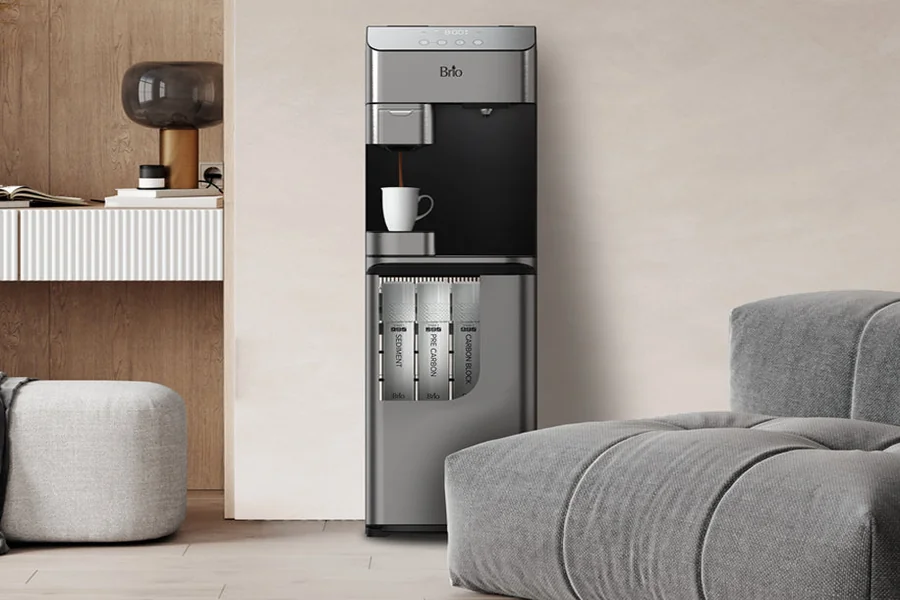
Most people don’t think about their water dispenser until something goes wrong. The water tastes off. The reservoir smells. The bottle keeps tipping during a refill. That’s usually when people start looking for something better — and that’s usually when they find Brio water technology.
So let’s talk about what Brio actually is, what makes it different & whether it’s worth spending money on.
What Brio Water Technology Actually Does
Brio builds water dispensers and filtration systems. That’s the short answer.
The longer answer is that Brio water technology focuses on solving the problems that basic water coolers ignore — bacterial growth inside the tank, sediment in the water, and the hassle of cleaning a unit every few weeks to keep it safe.
Their product range covers bottom-load coolers, countertop units, and point-of-use systems that connect straight to your water line. Depending on the model, you get multi-stage filtration, UV sterilization, and in some cases a self-cleaning function that runs on ozone.
These aren’t features added to look good on a spec sheet. Each one addresses a specific, real problem that standard water dispensers don’t bother with.
Brio Water Technology — Fact Table
| What You’re Looking At | The Detail |
| Filtration stages | 3 to 7 depending on model |
| UV sterilization | Available on select units |
| Self-cleaning method | Ozone-based, automated |
| Temperature settings | Cold, room temp, hot |
| Bottle compatibility | 3-gallon and 5-gallon |
| Point-of-use option | Yes — direct waterline connection |
| NSF certification | Available on select models |
| Filter lifespan | 6 to 12 months average |
| Energy Star models | Yes |
| Starting price range | $100 to $600+ depending on type |
The Core Technology — Explained Simply
Filtration Brio water technology uses anywhere from 3 to 7 filtration stages depending on the model. Each stage targets something different — sediment, chlorine, heavy metals, dissolved solids. By the time water reaches your glass, most of the stuff you don’t want in it is already gone.
UV Sterilization This one’s worth paying attention to. Ultraviolet light kills bacteria and viruses without adding anything to the water. No chemicals. No aftertaste. Just UV frequency doing the work at a microbial level. Not every Brio unit has this, but the models that do are worth the extra cost for households with young kids or elderly family members.
Self-Cleaning with Ozone Ozone sanitation runs through the internal reservoir and water lines automatically. This matters because the inside of a water cooler — left uncleaned — becomes a breeding ground for bacteria faster than most people expect. Brio’s self-cleaning feature reduces how often you need to manually take the unit apart and clean it yourself.
Temperature Control Hot, cold, room temperature. Most Brio units cover all three. The internal components that handle heating and cooling are stainless steel, which reduces the risk of plastic leaching into your water over time.
How Brio Compares to a Regular Water Cooler
A standard water cooler cools water. That’s genuinely it.
There’s no filtration happening. No sterilization. No self-cleaning. You fill it with a bottle, it cools the water, and eventually you need to clean the reservoir yourself — which most people put off far longer than they should.
Brio water technology doesn’t work that way.
The filtration means the water quality is being actively improved before you drink it. UV sterilization handles what filtration can’t — living organisms. The ozone cleaning keeps the inside of the unit sanitary between your manual cleaning sessions.
Is it more expensive upfront? Yes. Is the difference noticeable in daily use? Also yes.
Point-of-Use Models — Where Brio Gets Interesting
If you’re spending money on bottled water delivery every month, a Brio point-of-use system deserves a serious look.
These units connect directly to your home water supply. Tap water runs through the filtration stages inside the unit before it reaches you. No bottles to order. No delivery schedules to manage. No running out on a Sunday when the store is closed.
The upfront cost is higher — usually $300 to $600 for a quality POU model. But over 12 to 18 months, most households come out ahead financially compared to ongoing bottle delivery costs.
Some Brio POU units are also tankless. Water is filtered and temperature-adjusted on demand rather than sitting in a stored reservoir. Less storage means less opportunity for bacterial growth — which brings the whole thing back to the original point of Brio water technology: keeping the water actually clean, not just cold.
Who Gets the Most Out of Brio Water Technology
Families with young children. The UV sterilization and self-cleaning matter more when you have kids drinking from the unit multiple times a day.
Small offices. A self-cleaning unit with hot and cold dispensing cuts down on maintenance time and keeps the setup hygienic without someone needing to manage it constantly.
People are already buying bottled water. If you’re spending $30 to $60 a month on delivery, a point-of-use Brio system likely pays for itself within a year.
Renters. The freestanding and countertop models don’t need permanent installation. You take them with you when you move.
The Bottom Line
Brio water technology sits in a specific gap in the market — above basic coolers, below full home filtration systems. It gives you cleaner water, less maintenance, and more control over what’s coming out of your dispenser without requiring a plumber or a renovation.
It’s not the cheapest option. But for what it does consistently — filter, sterilize, self-clean, and dispense at the right temperature — it’s one of the more practical investments in your daily routine.
If you’re drinking water every day (and you are), the quality of that water is worth thinking about. Brio makes that easier to act on.
FAQs:
Q: What is Brio water technology?
Brio water technology is an arrangement of water dispensers and filtration units that make use of multi stage filtration, UV sterilization, and ozone self-cleaning to provide cleaner and safer drinking water at home or in the office.
Q: How does Brio water technology work?
The Brio systems use 3 to 7 steps to filter tap or bottled water to remove sediment, chlorine and heavy metals. Some models incorporate UV light to kill bacteria and ozone to automatically disinfect the inside reservoir.
Q: Is Brio water technology safe?
Yes. Brio models with NSF/ANSI certification are independently tested and certified to verify their respective claims to filtration. The UV sterilization and ozone self clean capabilities further reduce the risk of bacteria as compared to normal dispensers.
Q: What is the self-cleaning feature in Brio water technology?
The self-cleaning capability of Brio is an automated way of cleaning the internal water tank and the lines of Brio using ozone to clean the water tank and the lines. This helps it prevent the accumulation of bacteria and algae without you having to dismantle the unit manually every couple of weeks.
Q: How often do Brio filters need to be replaced?
Most Brio water technology filters last between 6 and 12 months depending on usage and water quality. The unit typically signals when a replacement is due.
Q: What is a Brio point-of-use water dispenser?
The Brio point of use dispenser attaches directly to the water line of your home, rather than utilising bottles. It chooses to filter tap water when you need it – eliminating the delivery expenses and ensuring that you never run out of filtered water.
Q: How much does Brio water technology cost?
Entry-level Brio units start around $100 to $150. Point-of-use models with UV sterilization and self-cleaning range from $300 to $600 depending on features and capacity.
Q: Who is Brio water technology best for?
Brio water technology will be most effective in the families with minor children, in small offices, in the cases of the renters who need a portable solution or in the situation where the person is already spending their money on the delivery of the bottled water and would like to have an inexpensive long-term alternative.